
May 22, 2026
How to Choose Branded Products People Will Actually Use
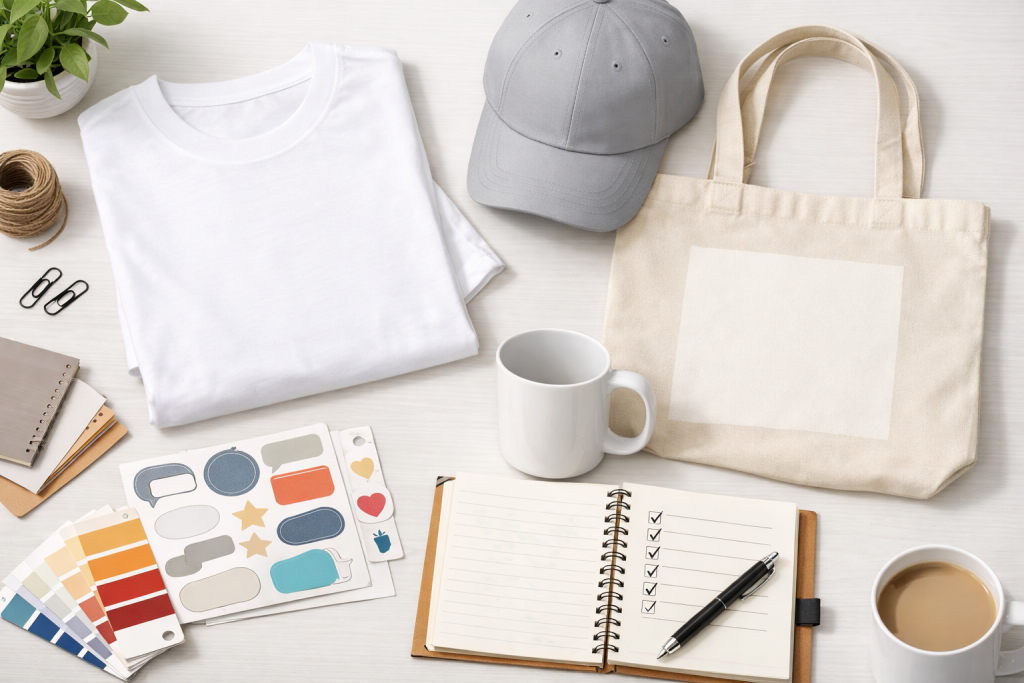
Useful merch starts with the person who will use it
Branded products work best when they fit a real habit. A shirt that feels good gets worn. A tote that holds enough gets carried. A hat that matches the brand and the audience gets grabbed on the way out the door. The logo matters, but the product has to earn its place in someone’s day.
That is why the strongest merch choices usually come from simple questions: Who is this for? Where will they use it? What would make them keep it? Those answers help small businesses, creators, and organizations avoid random swag and build a tighter collection.
Start with the audience
A fitness community and a professional services firm should not build the same merch lineup. One audience may want performance shirts, caps, and water bottles. The other may respond better to polos, notebooks, and clean desk items. Both can be branded well, but the use case is different.
Before choosing products, write one sentence about the buyer or supporter. For example: “Busy parents who attend weekend youth sports,” or “local customers who already like our coffee shop,” or “followers who want subtle creator merch they can wear often.” That sentence becomes a filter.
Choose products by context
- Daily wear: T-shirts, hoodies, hats, and polos work when the design is clean and wearable.
- Work settings: Aprons, uniforms, polos, outerwear, and name-friendly designs help teams look consistent.
- Events: Shirts, stickers, totes, and drinkware are easy to explain and easy to share.
- Local visibility: Hats, car magnets, and bags can move your brand through the places your audience already goes.
Keep the first collection tight
More products do not always make a stronger HUB. Too many choices can make the collection feel unfocused. A better first move is to launch with a few pieces that cover different needs: one wearable item, one everyday-use item, and one low-cost item people can buy or share easily.
For example, a small business might start with a hat, a shirt, and a tote. A creator might start with a hoodie, sticker, and mug. A nonprofit might start with a campaign shirt, water bottle, and tote. Each item should have a reason to exist.
Make the design wearable
A product can be useful and still fail if the design is too loud for the audience. The strongest branded merch often feels like something a person would choose even if they were not being asked to promote a brand. That does not mean the logo needs to disappear. It means placement, scale, color, and contrast need to be intentional.
Small front marks, clean back graphics, simple typography, and color choices that match the product can make merch easier to wear. For workwear or uniforms, clarity matters even more. The brand should be readable without making the item feel forced.
Use a HUB to test before expanding
A YSTY HUB can help you test a focused lineup before committing to a larger merch strategy. Start with the products most likely to fit your audience, share the HUB, and watch what people choose. The next products should come from that response, not from guesswork.
If you already have a logo, group, event, or brand idea, start a free HUB and build a product mix around what your people will actually use.